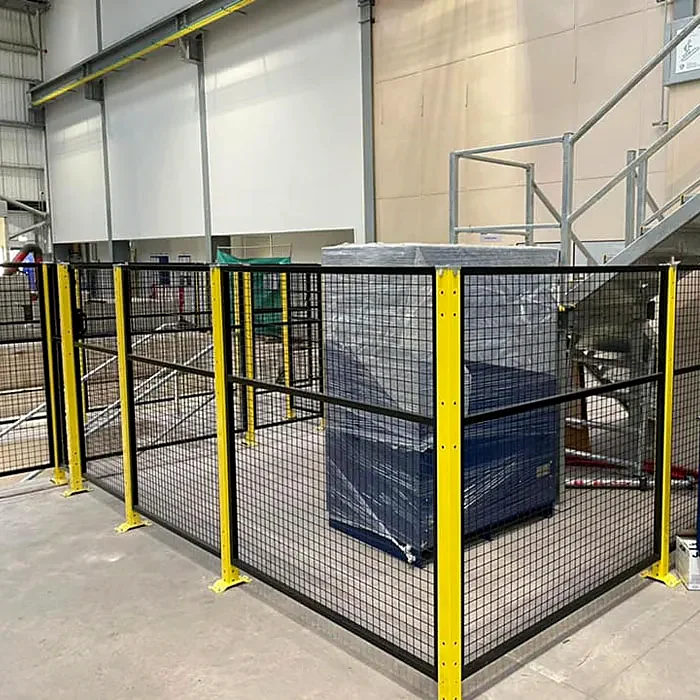
Cobot machine tending safety
Make the robot and machine safe together.
Guarding, interlocks and safety-control integration for cobots tending CNC machines, presses, moulding machines, test equipment and other automated processes.
Direct answer
How do you safeguard a cobot machine-tending cell?
Treat the robot and machine as one integrated application. The review must cover the machine door, chuck or clamp, internal movement, hot parts, swarf, fluids and ejection as well as the cobot, tool and transfer path. Their controls need coordinated safe states, access and restart behaviour.
The cobot is only one part of the cell.
A machine-tending concept should follow every state from manual loading and set-up through automatic production, fault recovery, cleaning and maintenance.
Machine hazards
Spindles, chucks, clamps, slides, pressure, temperature, swarf, cutting fluid and ejected material.
Robot transfer
Reach, payload, gripper, component retention and trapping at the door, fixture or hand-off.
Automatic door
Closing force, crush points, position monitoring and the sequence shared with robot and machine cycle.
Mode control
Production, teaching, set-up, manual intervention and maintenance need defined permissions and safe behaviour.
Fault recovery
Common jams, dropped parts, misloads and tool faults determine where people reach and what energy remains.
Restart
Reset and restart should not create unexpected movement when a person or obstruction may remain in the cell.
Coordinate every protective function.
The agreed project boundary should say which party is responsible for the robot, machine, guarding, controls, validation and overall application.
Explore interlocks and restart controlFrom survey to recorded handover.
Mechanical guarding and safety-control behaviour are developed around production constraints and the actual intervention tasks.
Define
Machines, tools, tasks, modes and responsibilities.
Survey
Access, hazards, interfaces, layout and evidence.
Engineer
Guarding, safe states and control requirements.
Integrate
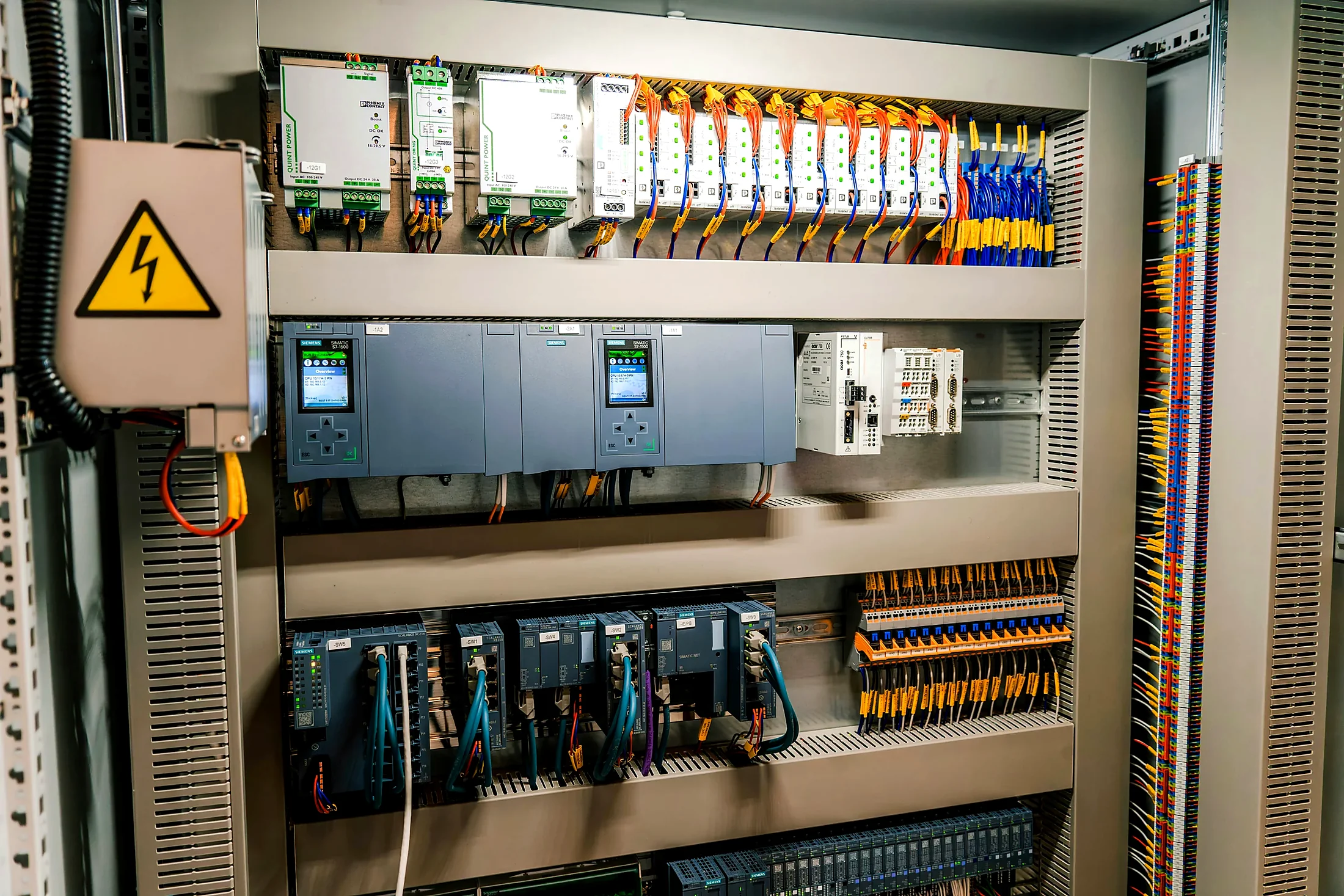
Fabrication, installation and agreed wiring scope.
Validate
Functional testing against the defined requirements.
Answers for integrators and manufacturers.
Often, because the complete cell includes hazards from the machine tool, chuck, clamp, swarf, hot parts, fluids, ejection and the robot end effector. The assessment determines whether physical guarding, interlocks, presence sensing or combined measures are needed.
Potentially, where the door, interlocking, stopping behaviour, control interface and operating sequence are suitable for the defined safety function. The machine and robot need coordinated safe states and validated restart behaviour.
Yes. A survey can review the installed robot, CNC, automatic door, guarding, controls, access tasks and production constraints before a retrofit scope is agreed.
Useful information includes robot and machine models, layout, door and chuck sequence, end effector, component, operating modes, photographs, cycle target and details of loading, recovery and maintenance access.
Plan the complete cell
Show us the robot-to-machine sequence.
Send the layout, machine and robot models, a cycle description and photographs. We will help define the survey and safeguarding scope.