Physical separation
Cobot guarding shaped around task and access.
Mesh, polycarbonate, solid-panel and hybrid guarding for collaborative-robot applications—designed to control the real hazard without consuming unnecessary floor space.
Direct answer
Physical guarding is still valuable in a collaborative cell.
A compact fixed panel can remove access to a trapping point. A clear screen can separate operators from swarf, heat or a sharp tool. A short perimeter can guide approach towards a scanner-protected loading position. The objective is not to cage the cobot—it is to control the hazards the complete application creates.
Protection where it adds value.
Guard type, height, apertures, fixing, access and distance from the hazard are selected together. A material choice on its own does not define a safe system.
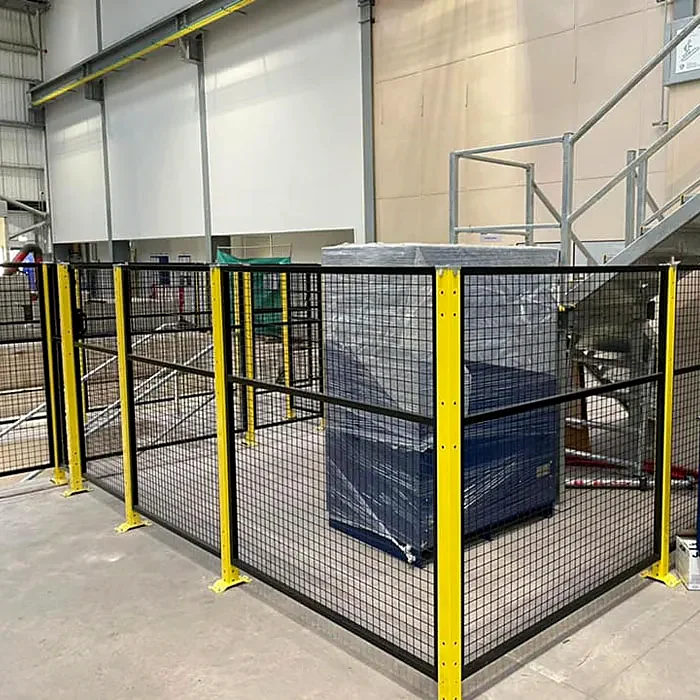
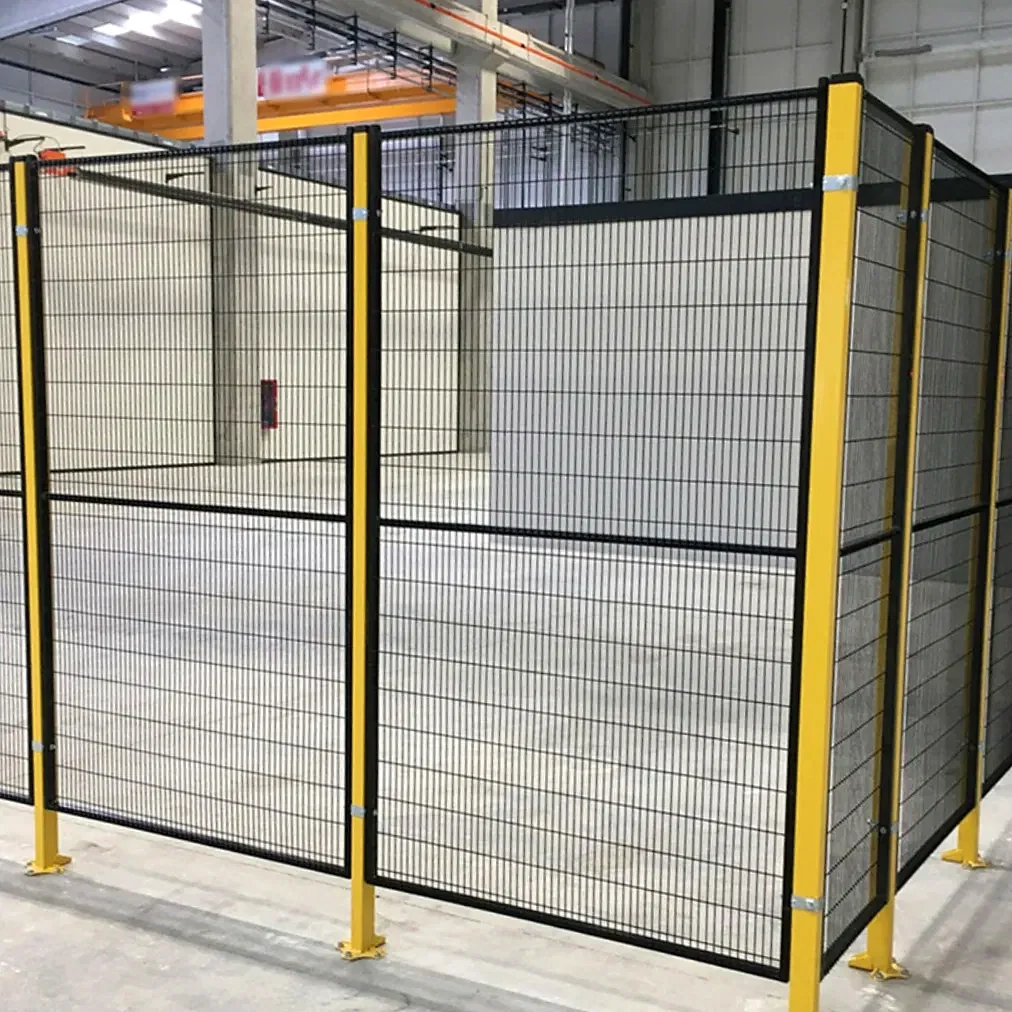
Modular mesh guarding
Strong, visible separation around reach, trapping and transfer hazards, with adaptable posts, panels and controlled access points.
Clear polycarbonate panels
High-visibility screens and enclosures for applications where line of sight, cleanliness or containment is important.
Solid sheet & specialist panels
Fabricated steel, stainless or application-specific materials where process containment, hygiene or durability governs the design.
Partial guarding
Local protection around tooling, fixtures, presses, machine interfaces, conveyor transfers and other defined hazards.
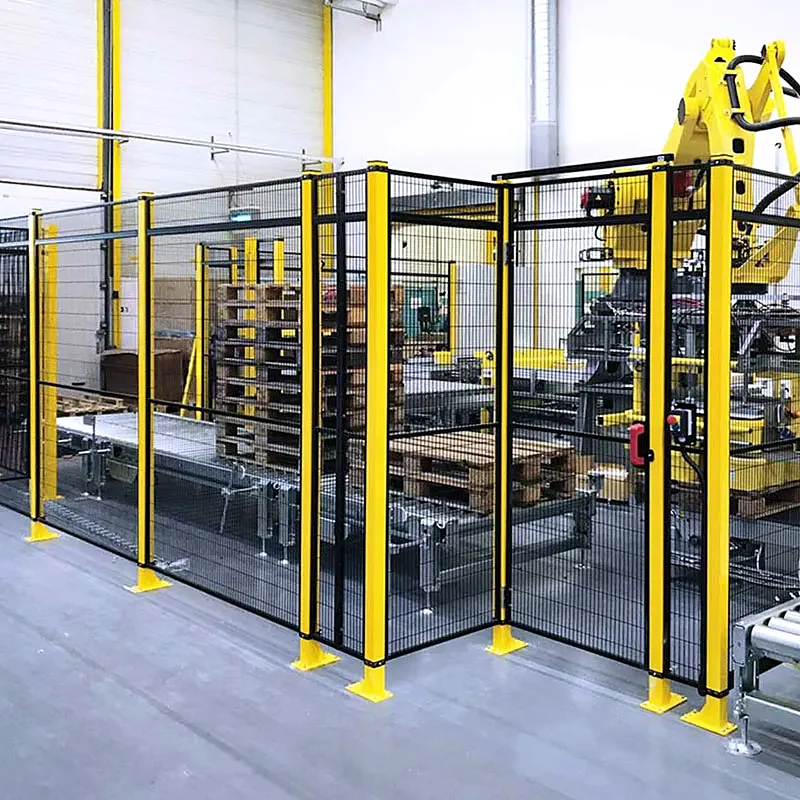
Doors, hatches & access
Hinged, sliding or removable access designed around normal loading, maintenance, recovery and escape requirements.
Retrofit systems
Guarding added to existing cobot and robot cells while accounting for established layouts, services and production constraints.
 Designed as a systemPanel size, openings, distance, access and fixing all influence protection.
More than panels and posts.
A reliable guarding arrangement starts with the hazard envelope and the work people must perform. The design should not create new pinch points, obstruct essential visibility or make routine intervention impractical.
- Reach distance, guard height and permissible openings
- Robot, tool and payload swept volume
- Mechanical strength and foreseeable impact
- Product flow and guarded transfer openings
- Cleaning, service and component changeover
- Floor condition, services and installation access
Choose by hazard, not appearance.
The table is a starting point only. Final specification depends on the risk assessment, process, environment and relevant standards.
| Guard type | Typical strengths | Points to resolve | Typical uses |
|---|---|---|---|
| Welded mesh | Visibility, airflow, modularity and robust separation | Reach through openings, distance, containment and cleaning | Perimeters, cells and guided approach routes |
| Polycarbonate | Clear view and improved containment of light debris | Thickness, impact, scratching, chemicals and fixing | Tool screens, clean areas and compact enclosures |
| Solid sheet | Containment, privacy, durability and washdown options | Visibility, ventilation, heat, noise and access | Welding, machining and process-hazard separation |
| Hybrid | Combines visibility, containment and cost control | Interfaces between materials and consistent fixing | Application-specific cells and line integration |
Questions engineers ask early.
There is no universal best material. Mesh offers visibility and airflow, clear polycarbonate can help contain light debris and preserve sight lines, and solid sheet can provide separation from process hazards. The choice depends on the hazard, required containment, access, cleaning and environment.
Yes. Partial guarding can isolate a tool, fixture, conveyor interface or trapping zone while leaving a genuinely collaborative area accessible. The open boundaries and foreseeable approach routes still need to be assessed.
Modular systems can support future adjustment, but any change to position, robot task, payload, tooling or access can change the risk assessment and required safety distances. Redeployment should be treated as a controlled modification.
Projects can include bespoke steel or aluminium frames, mesh panels, clear polycarbonate, fixed panels, removable maintenance sections and interlocked doors, subject to the agreed design and application requirements.
Start with the application
Share the robot, tool, task and access requirement.
Send photographs, a layout or a short description. We will help define the survey, guarding concept and safety-integration scope.