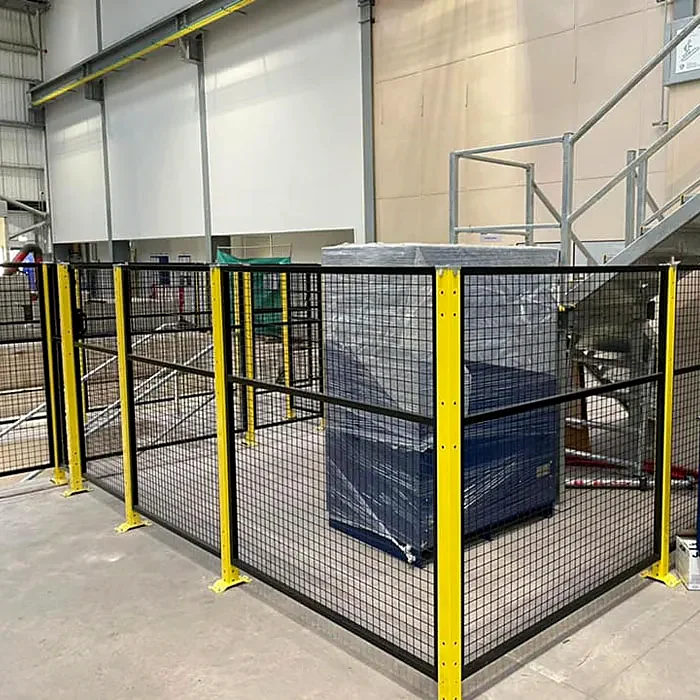
Presence sensing & safety control
Protective devices designed around approach and stopping.
Safety laser scanners, light curtains and monitored protective fields integrated with the cobot, surrounding equipment and restart strategy.
The central question
What must happen before a person reaches the hazard?
A protective device is only one part of the safety function. Detection capability, field position, approach speed, response time, robot stopping performance, other moving equipment and the reset method must work together to achieve the required protective response.
Sense access. Control the response.
We develop the protective-device arrangement within the complete safeguarding concept, including physical boundaries and production interfaces.
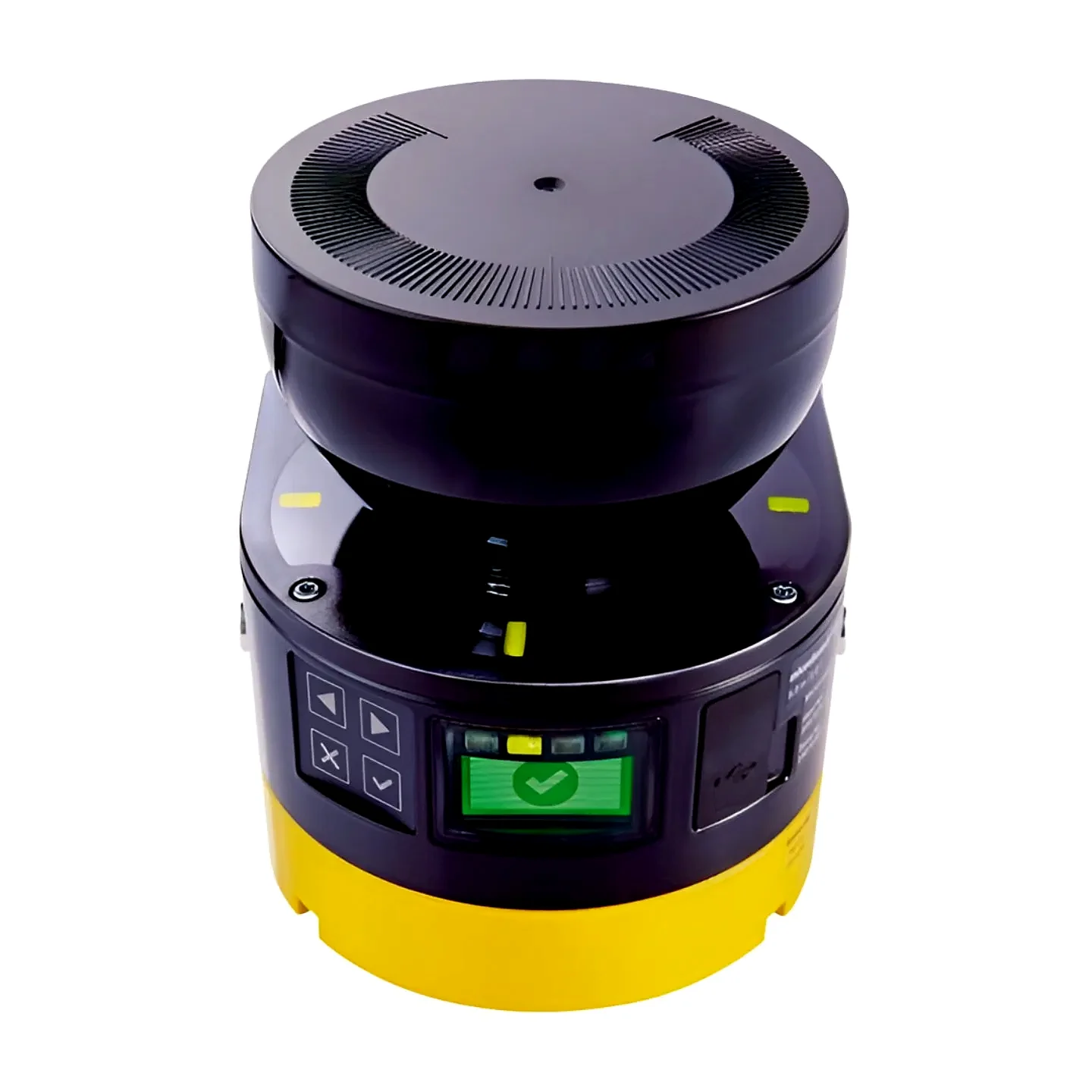
Safety laser scanners
Configurable warning and protective fields for floor-level approach, defined zones and applications where frequent open access is required.
Safety light curtains
Optical guarding across defined openings, loading points or access routes where interruption must initiate a safety-related response.
Area & access sensing
Protective-device combinations selected to detect approach, entry or presence according to the geometry and foreseeable behaviour.
Safety relays & PLCs
Logic, diagnostics and interfaces developed to implement agreed safety functions and coordinate the cobot with connected machinery.
Mode-dependent protection
Different protective responses for automatic, manual, teaching or maintenance modes where supported and properly controlled.
Functional validation
Documented checks of detection, stop response, reset behaviour, fault response and agreed safety-function performance.
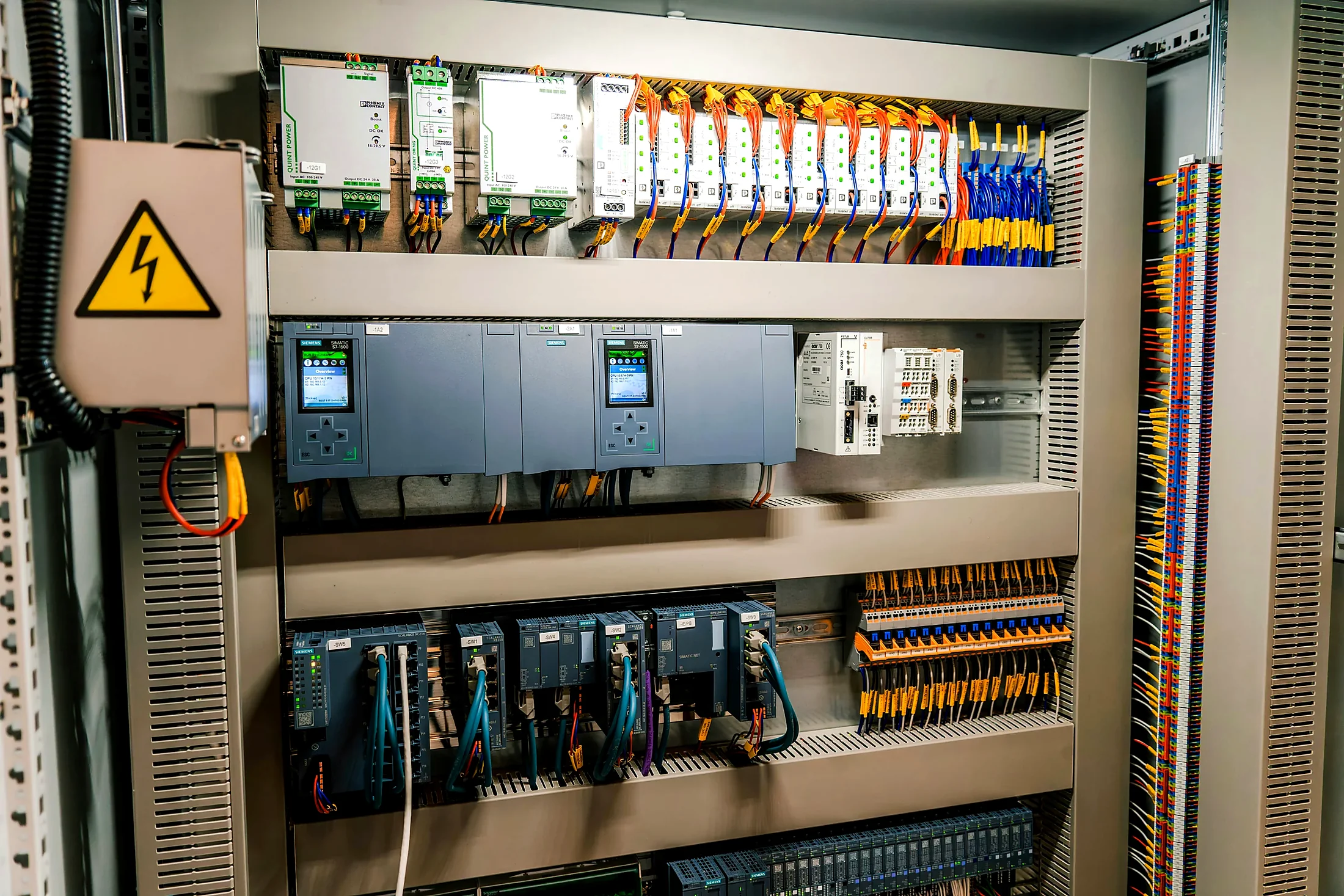 One safety functionDevice, logic, outputs, stopping response and reset must be coordinated.
Detection distance comes after stopping data.
Field size and device position cannot be chosen by eye. The design needs credible response and stopping information, foreseeable approach routes and a clear definition of the hazard state.
- Required safety function and safe state
- Total system response and stopping time
- Approach direction, speed and reach over or around
- Possibility of standing inside the protected space
- Environmental effects, obstructions and nuisance trips
- Reset visibility, location and restart interlocking
Different strengths for different boundaries.
This comparison is indicative. Device suitability and positioning must be confirmed for the actual application.
| Consideration | Safety laser scanner | Safety light curtain |
|---|---|---|
| Protected shape | Flexible two-dimensional floor fields | Defined optical plane across an opening |
| Warning field | Often supports an outer warning or slowdown field | Normally a single guarded boundary, device dependent |
| Typical strength | Open access and shaped approach zones | Compact, clearly defined entry points |
| Key challenge | Occlusion, floor-level geometry and changing obstructions | Reach over/under, bypass and access behind the curtain |
| Design basis | Stopping time, approach, resolution, mounting, environment and restart strategy | |
From field shape to safe restart.
A scanner can monitor shaped floor zones and support warning plus protective fields. A light curtain provides a defined optical boundary at an opening. The correct choice depends on approach direction, stopping distance, access frequency, environment, restart strategy and the safety function required.
Potentially, where the robot and control system support the required monitored functions and the protective field accounts for stopping performance and approach. The complete speed-and-separation concept must be engineered and validated for the application.
The restart strategy depends on the ability to stand unseen inside the safeguarded space, the operating mode and the risk assessment. Where access is possible, reset location, visibility and prevention of unexpected restart are critical design considerations.
Yes, but product movement, pallets, fork trucks, reflections, floor condition and changing obstructions can affect field design and availability. Guarding, muting or protected transfer measures may also be needed.
Start with the application
Share the robot, tool, task and access requirement.
Send photographs, a layout or a short description. We will help define the survey, guarding concept and safety-integration scope.