Direct answer · UK cobot safety
Do cobots need guarding?
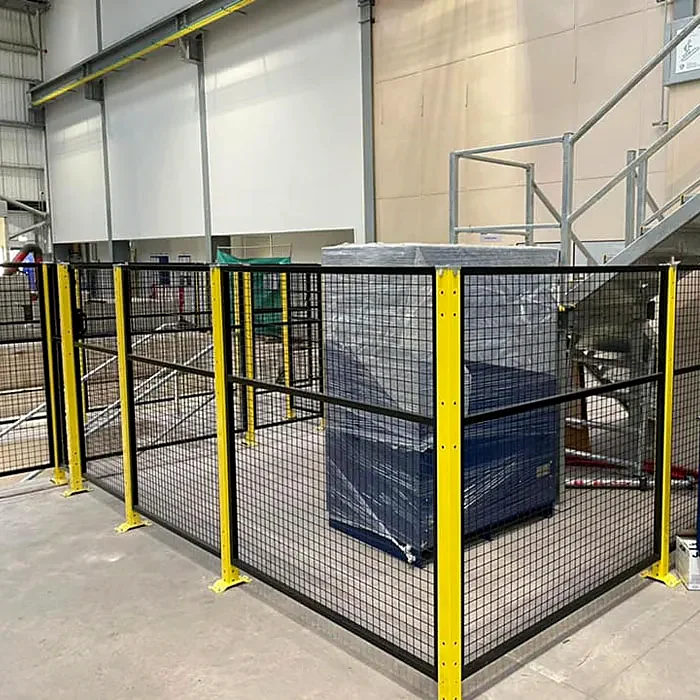
Sometimes. The complete application—not the robot label—determines whether it needs fencing, a local guard, presence sensing, controlled access or another protective measure.
Direct answer
A collaborative robot is not automatically an unguarded application.
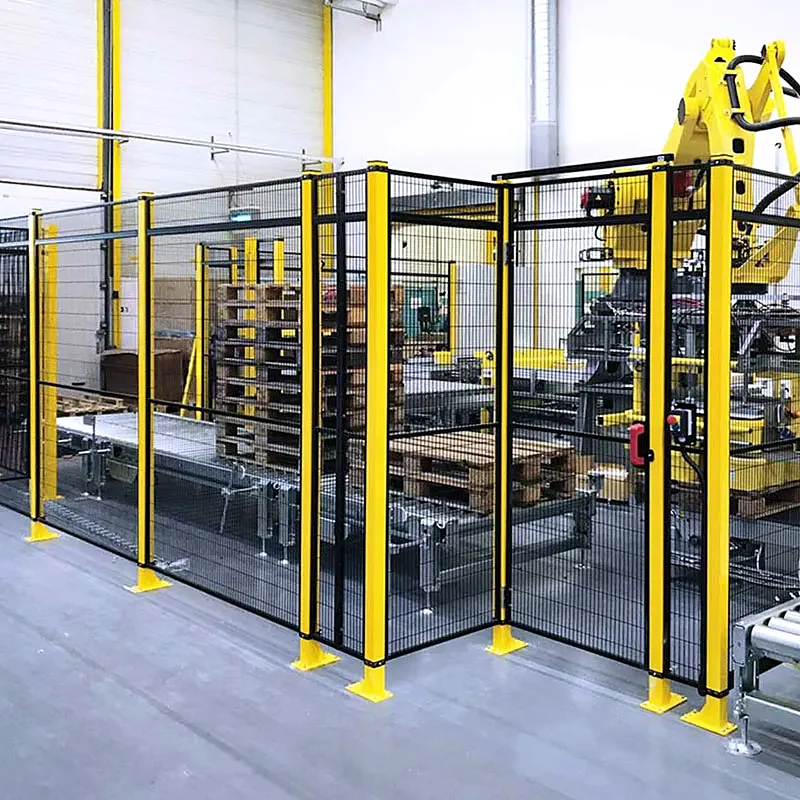
A cobot may operate without a conventional full fence only where an application-specific assessment shows that the robot, end effector, workpiece, process, surroundings and human interaction are adequately controlled. Physical guarding, local screens, scanners, light curtains or interlocked access can still be necessary.
Reviewed by Oxford Machine Guarding technical team · 2026-09-01
Start with the hazards people can actually reach.
These questions turn the broad ‘does it need a fence?’ discussion into a usable safeguarding brief.
What can the tool do?
Review grippers, screwdrivers, welders, cutters, dispensers and every accessible sharp, hot, rotating, pressurised or trapping feature.
What is it carrying?
Payload mass, shape, temperature, stability, retained energy and behaviour after grip or power loss can change the risk completely.
Where can trapping occur?
Map crushing and shearing against benches, fixtures, walls, conveyors, machines, stored product and the robot itself.
What does the process add?
Arc, fumes, sparks, swarf, ejection, liquids, heat, pressure and connected equipment may require separation or containment.
When do people enter?
Include loading, replenishment, teaching, inspection, recovery, cleaning and maintenance—not only automatic production.
Can the hazard stop in time?
Presence sensing needs project-specific response and stopping data, approach geometry, protective distance and controlled restart.
Safeguarding follows the application finding.
These are planning directions, not automatic selections. Several measures are often combined.
See the cobot risk-review processUse the hierarchy—do not start with a component.
Define the machine limits and human tasks, identify hazards, reduce risk by design, then select guards and protective devices for what remains. Information, training and procedures support engineered protection; they do not replace it where a practical safeguard is required.
Define
Robot, tool, payload, process and all operating modes.
Observe
Approach, access, recovery and maintenance tasks.
Reduce
Remove hazards and trapping geometry where practicable.
Protect
Coordinate guarding, sensing and safety functions.
Verify
Test the defined response and record the result.
Reassess after every material change.
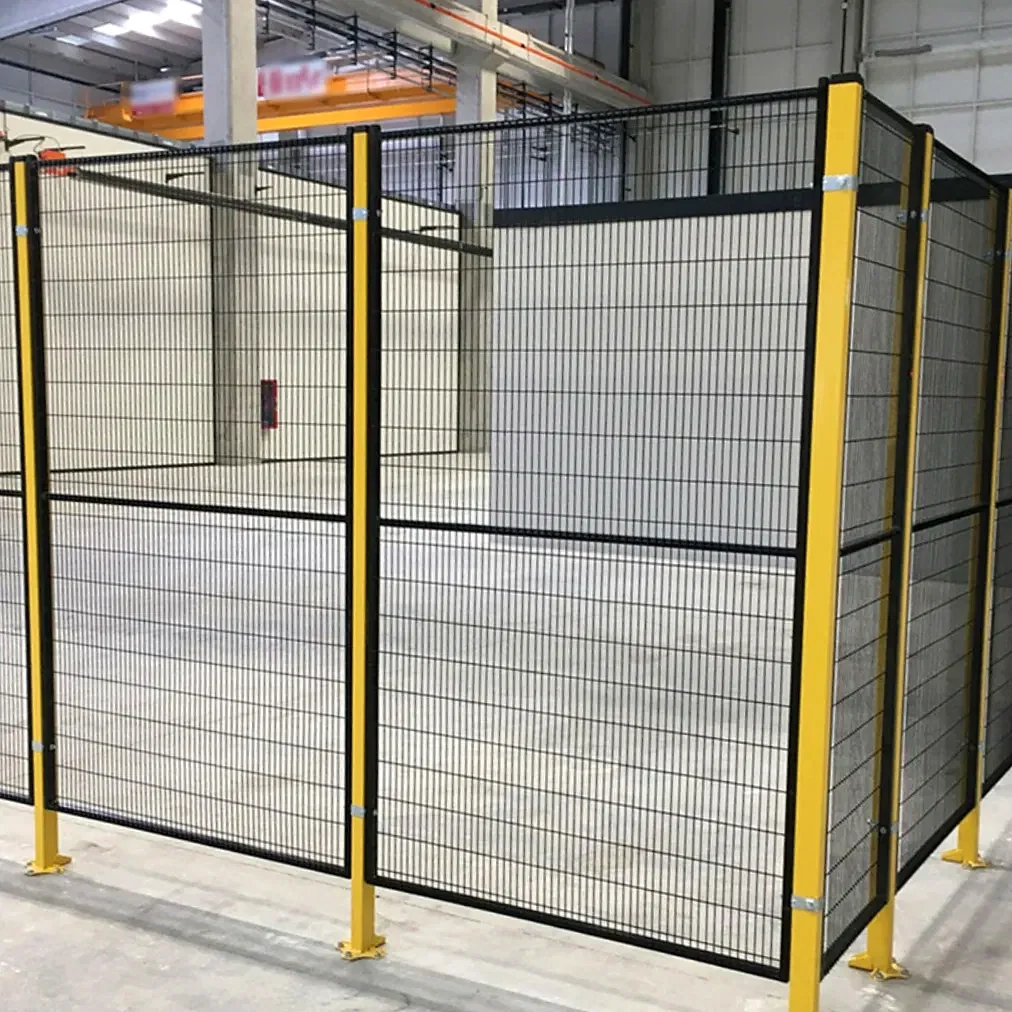
A cobot can be reprogrammed or redeployed quickly, but a change to tool, workpiece, payload, speed, fixture, path, operating mode, floor layout or connected machine can invalidate earlier assumptions.
- New or modified end effector
- Higher speed, payload or production rate
- Different product geometry or temperature
- New operator or maintenance task
- Incident, near miss, defect or bypass
 Change controlFlexible automation still needs controlled safety review.
Use current sources and application-specific evidence.
This page is general project-planning information, not a substitute for a machine-specific risk assessment, legal advice or verification by the responsible dutyholder. Relevant standards, British adoptions and the legal route should be confirmed for the actual supply or modification.
HSE: introduction to machinery safety · HSE: Provision and Use of Work Equipment Regulations 1998 · ISO 10218-2:2025: industrial robot applications and robot cells
Four decisions to take into the risk review.
There is no blanket rule that every cobot needs a fence or that every cobot may run without one. The complete work application must be assessed and suitable measures must control the hazards identified.
No. It can reduce some contact risks but does not automatically control sharp tools, hot processes, unstable loads, ejection, or crushing against fixtures.
Yes, where the application assessment supports it. A local guard can isolate a tool, fixture or trapping zone while other measures protect open access routes.
Reassess after material changes to the programme, speed, payload, tool, product, fixture, layout, access task or connected equipment, and when incidents or defects reveal new information.
Make the decision application-specific
Share the robot, tool, task and access requirement.
Send a layout, photographs and a short process description. We can help define a survey, safeguarding concept or integrated project scope.