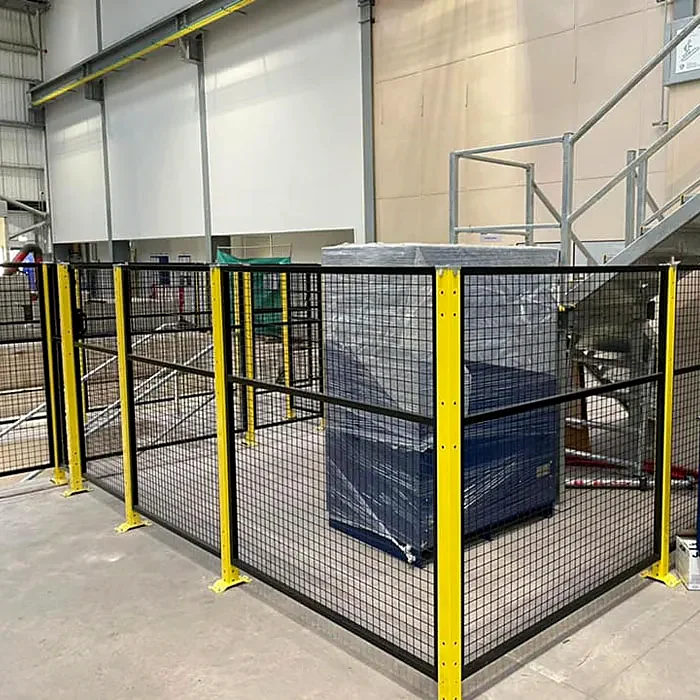
Application-led safeguarding
The task changes the risk profile.
Safeguarding concepts for cobot palletising, machine tending, welding, assembly, packaging, inspection and material-handling applications.
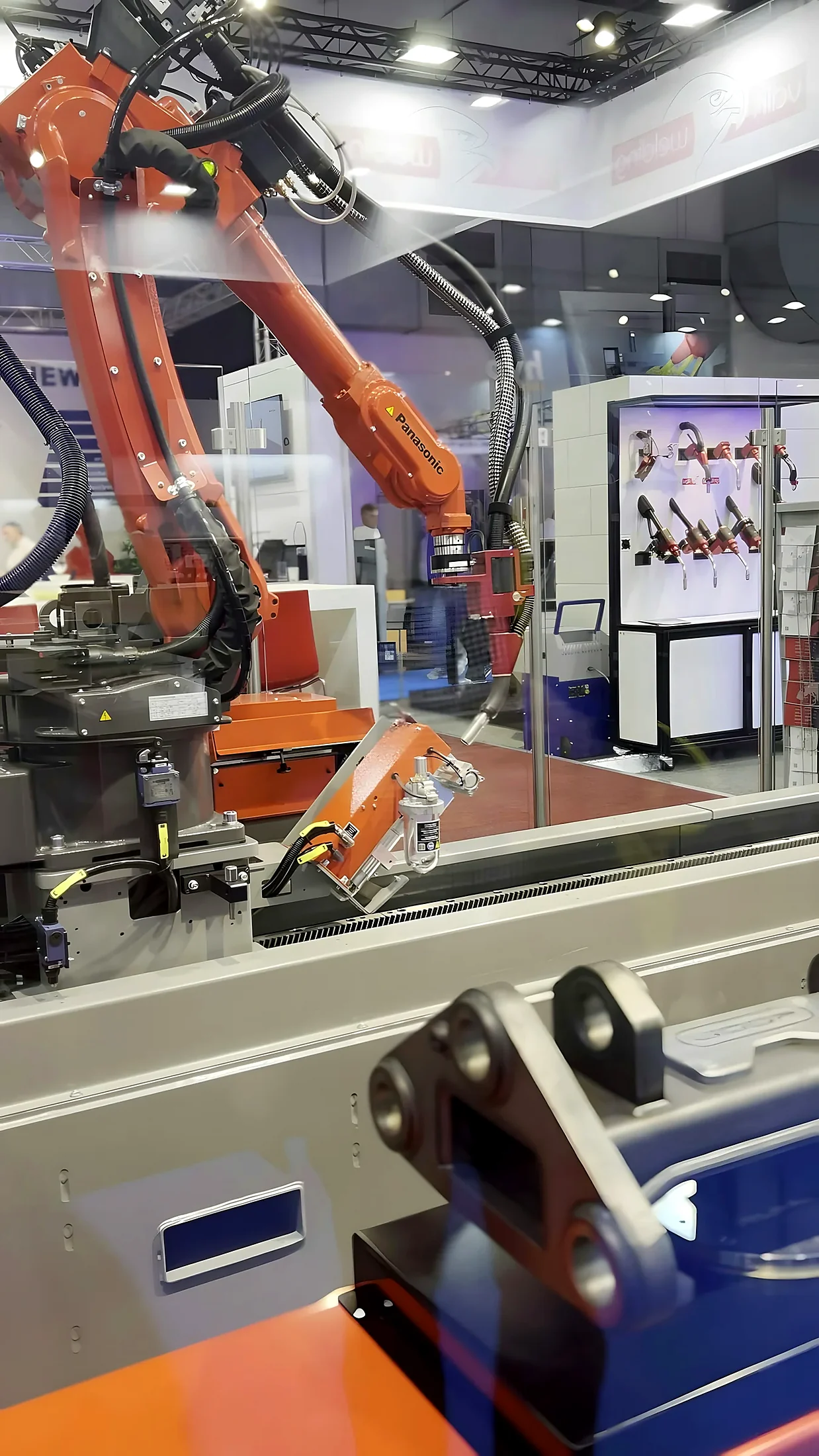
One arm, many hazards
Robot model alone does not define the guard.
A lightweight pick-and-place task, a palletising cell and a welding application can use similar collaborative robot hardware but need completely different risk-reduction measures. We start with what the robot holds, where it moves and how people interact with the process.
Protect the load, end effector and pallet exchange zone.
Palletising often combines repetitive robot motion, a large working envelope and regular operator or fork-truck access. The safeguarding concept must control the robot path and dropped-load or trapping risks while keeping pallet exchange practical.
- Fixed or partial guarding around non-access sides
- Scanner-protected pallet loading positions
- End-effector, vacuum-loss and dropped-load review
- Empty-pallet and finished-pallet transfer routes
- Reset position with full view of the exchange area
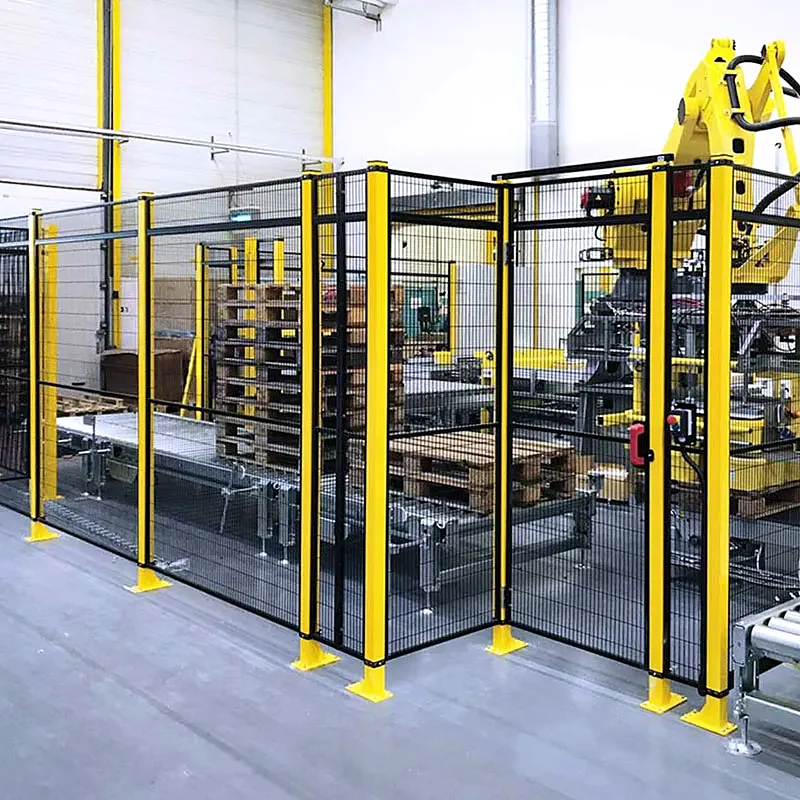 Typical objectiveFast pallet exchange without unprotected access to robot movement.
Coordinate two machines and every shared hazard.
A cobot tending a CNC machine, press, moulding machine or test station becomes part of an integrated system. Robot access and machine hazards must be coordinated across loading, automatic cycling, fault recovery and maintenance.
- Machine-door, chuck, clamp and fixture interlocking
- Hot component, swarf, fluid and ejection hazards
- Robot reach into the machine and transfer envelope
- Safe-state communication between control systems
- Manual loading and engineering access modes
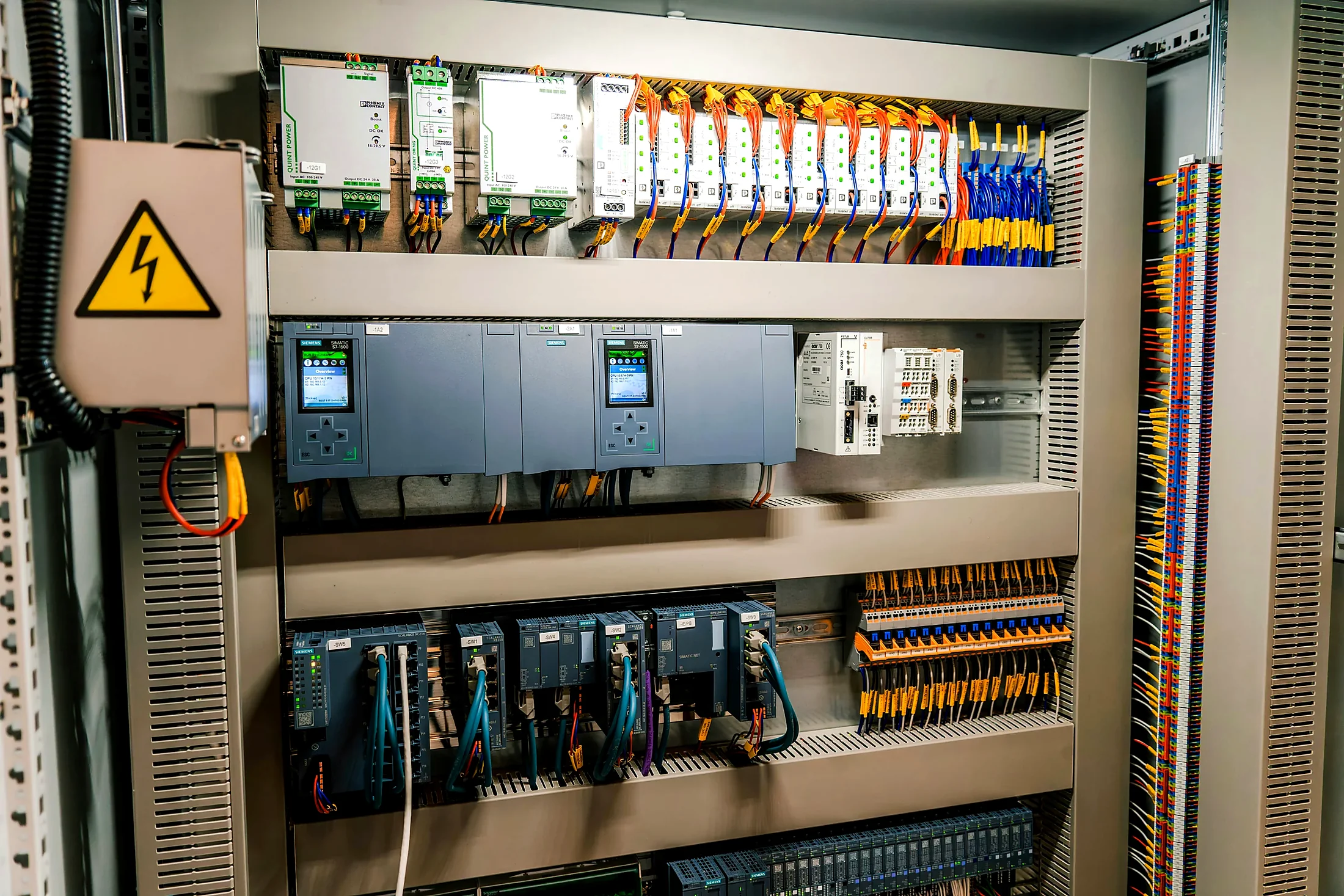 Integrated systemThe machine tool and cobot need coordinated safety functions and restart logic.
Contain the process hazard—not just robot movement.
Welding, grinding, polishing, dispensing and cutting can introduce light, heat, fumes, sparks, sharp tooling and stored energy. These applications often need enclosure, extraction, specialist screening and controlled access beyond the robot’s built-in protective functions.
- Welding screens, solid panels or full enclosure
- Fume extraction and ventilation interfaces
- Hot workpiece and tooling contact hazards
- Positioners, fixtures and trapping points
- Teach, wire-change and recovery access
Process containmentCollaborative robot features do not control welding arc, fumes or hot tooling.Keep the shared workspace genuinely collaborative.
Screwdriving, pressing, insertion, dispensing and component transfer can create local trapping, puncture or pinch hazards. Targeted screens, restricted spaces or device-monitored zones can separate those hazards while preserving operator access elsewhere.
- Local guarding around presses, fixtures and tools
- End-effector shape, force and accessible points
- Component presentation and operator hand position
- Shared-space boundaries and robot speed
- Tool change and fault-recovery sequence
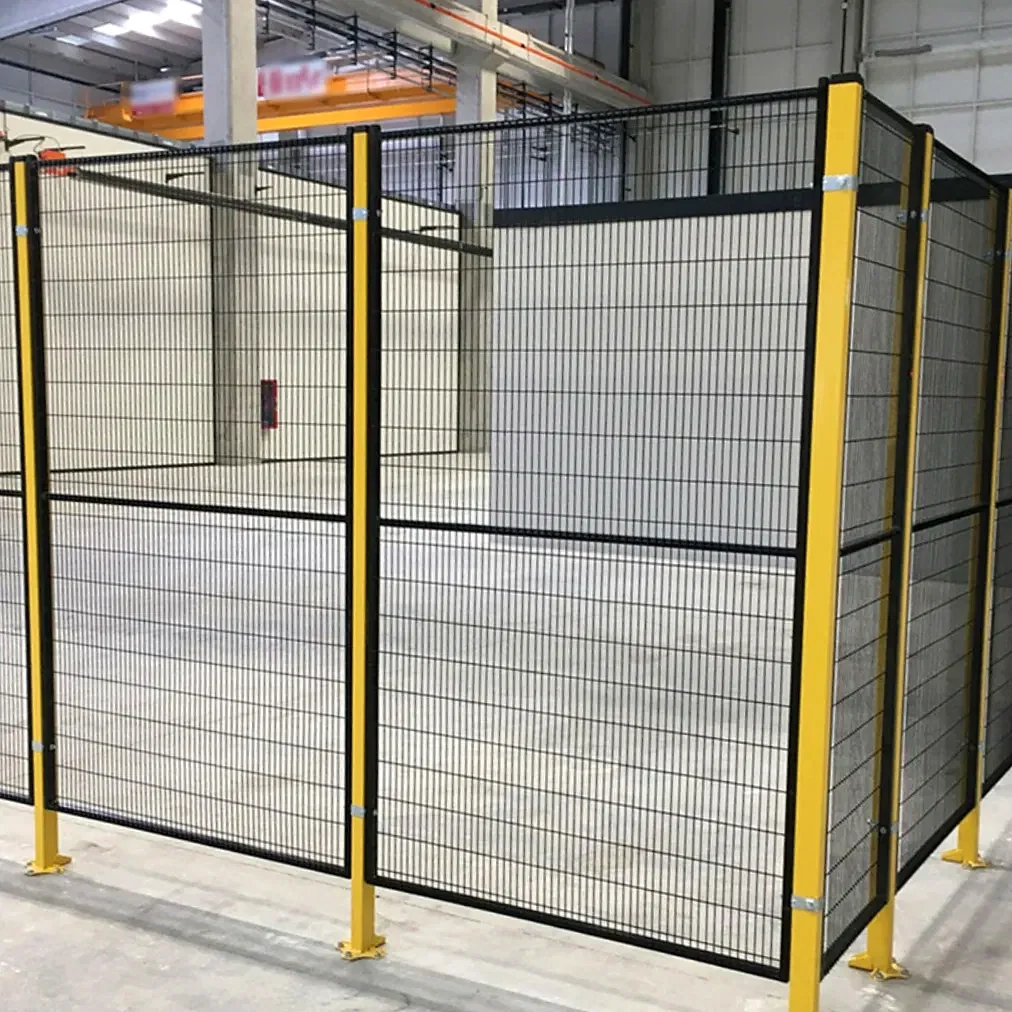 Targeted controlLocal physical guarding can remove a hazard while keeping adjacent work accessible.
Protect product flow without creating line bottlenecks.
Packaging applications may involve conveyors, case handling, inspection systems and frequent replenishment. Guarding has to maintain controlled access while avoiding new reach-through hazards at product infeed and discharge points.
- Conveyor transfer and opening protection
- Product replenishment and reject access
- Light curtains, scanners and muting where justified
- Interfaces with fillers, sealers, labellers and case equipment
- Cleaning, hygiene and changeover requirements
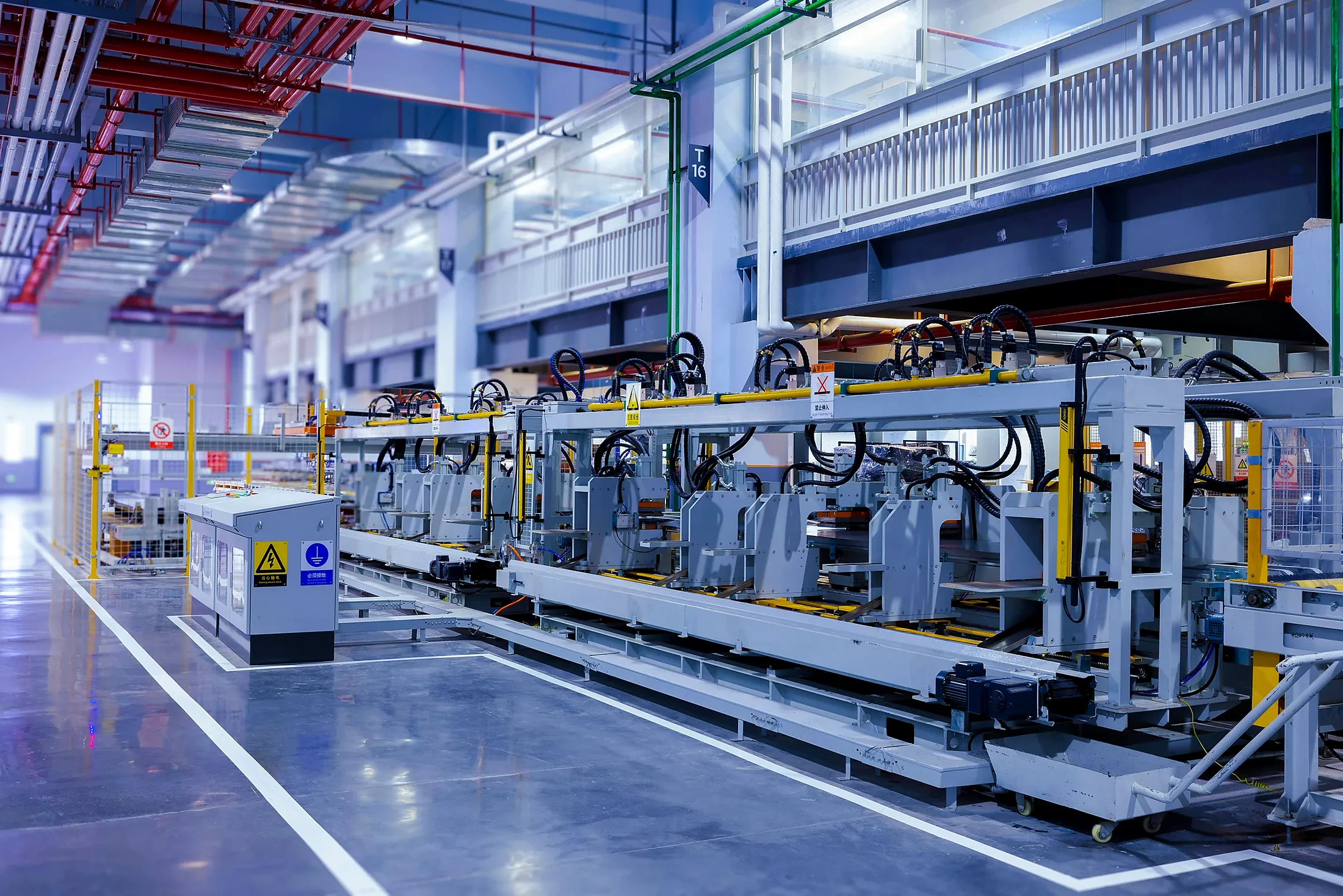 Line integrationUpstream, downstream and transfer-point hazards stay inside the project boundary.
Information that speeds up concept design.
Early clarity on the application reduces assumptions, improves the survey and produces a more reliable guarding proposal.
Manufacturer, model, reach, payload and available safety functions.
End effector, workpiece dimensions, mass, finish and hazardous features.
Programmed path, speeds, cycle target and pallet or batch pattern.
Loading, teaching, cleaning, recovery, maintenance and supervision.
Drawings, photographs, conveyors, machines, services and floor space.
New design, retrofit, known issue, installation window and decision date.
Guard the task, not the category.
Applications involving sharp or hot tooling, welding, machining, high-speed movement, heavy or unstable payloads, trapping fixtures, ejected material or hazardous neighbouring machinery commonly need physical protection or containment.
The pallet load, robot path, end effector, dropped-load risk and access pattern must be assessed. A common concept combines fixed guarding on non-access sides with a scanner-protected pallet exchange position, but the correct arrangement is application-specific.
The design considers hazards from both the cobot and the machine tool, including automatic doors, chucks, clamps, swarf, hot parts, ejection, services and the transfer interface. The machines need coordinated safe states and restart behaviour.
Yes, where the design envelope, access and safety functions cover every validated product, payload, tool and operating mode. Changeover settings and future variants should be defined during concept design rather than assumed later.
Start with the application
Share the robot, tool, task and access requirement.
Send photographs, a layout or a short description. We will help define the survey, guarding concept and safety-integration scope.