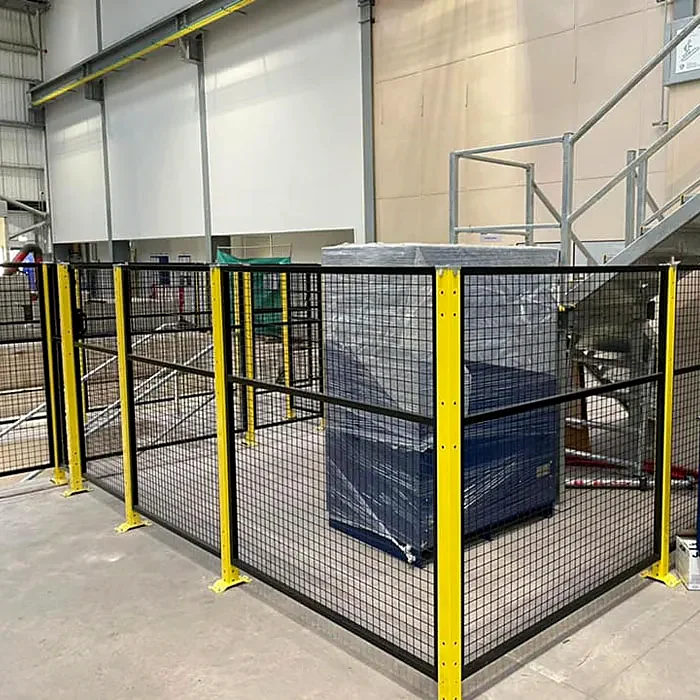
Palletising and depalletising safety
Cobot palletising guarding built around pallet exchange.
Protect robot movement, loads and trapping zones while keeping empty- and finished-pallet handling practical for operators and material-handling equipment.
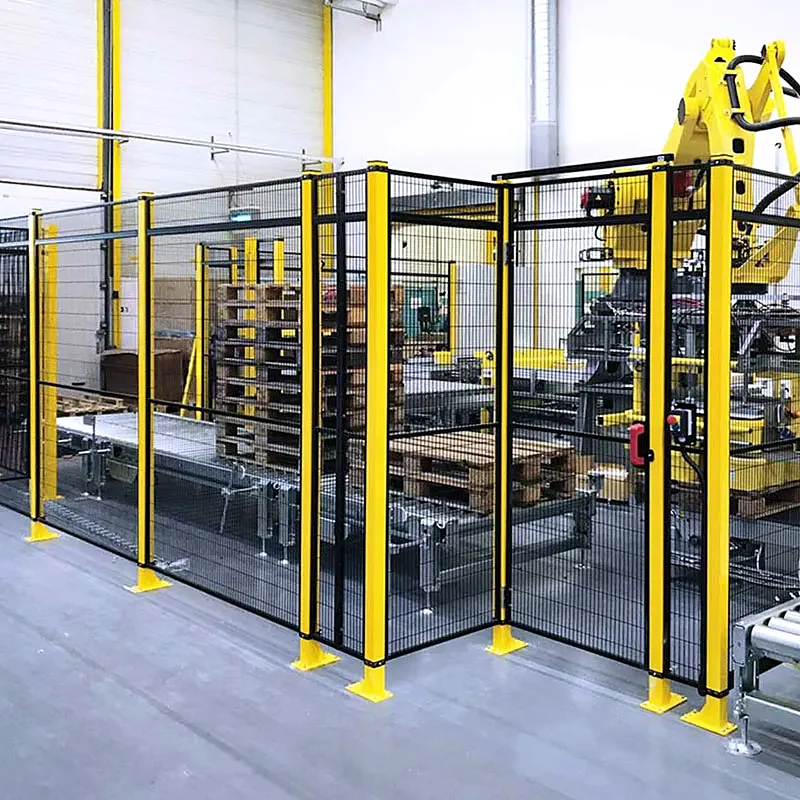
Direct answer
A cobot palletiser often needs more than the arm’s built-in safety functions.
Payload, end effector, full stack, unstable packs, robot reach, trapping against the pallet and repeated pallet exchange can create hazards that require fencing, scanners, controlled access or a combined safeguarding system.
Reviewed by Oxford Machine Guarding technical team · 2026-09-01
Assess robot, load and exchange route together.
The safeguarded boundary must cover tool extension, overhang, displaced product and every position used during teaching or recovery—not only nominal reach.
Grip-loss and dropped load
Review vacuum or clamp failure, packaging variation, payload retention and the consequences of a falling or swinging product.
Crushing and trapping
Map trapping between robot, gripper, stack, pallet, floor, fixed guard and surrounding structures.
Stack stability
Include cartons, bags, trays, sacks and irregular products across every approved pallet pattern and height.
Pallet exchange
Define operator, pallet-truck or forklift approach, empty-pallet presentation and finished-pallet removal.
Wide openings
Pallet apertures can permit whole-body or reach access and require a deliberate protective concept.
Recovery and service
Include damaged packs, fallen loads, teaching, tool service, cleaning and maintenance inside the real routine.
Protect access without weakening throughput.
The final arrangement depends on stopping performance, load stability, floor space, target rate and how people or vehicles exchange pallets.
Plan palletiser guarding costA pallet bay is a safety function, not just an opening.
The protective measure must initiate the defined robot response, maintain the safe condition while access continues, support deliberate reset from a suitable position and prevent reset alone from starting hazardous movement.
Detect
Person, vehicle, gate or pallet-bay state.
Respond
Robot and connected equipment reach safe state.
Maintain
Safe condition persists throughout access.
Reset
Deliberate acknowledgement with suitable view.
Restart
Separate controlled action returns production.
Send the load, pattern and exchange method.
Provide robot and tool details, maximum payload, stack dimensions, pallet positions, target rate, layout, photographs, access method, vehicle route, existing controls and installation location.
- Maximum load and stack envelope
- All pallet and product variants
- Empty and finished pallet routes
- Operator and vehicle access
- Recovery and stretch-wrap interaction
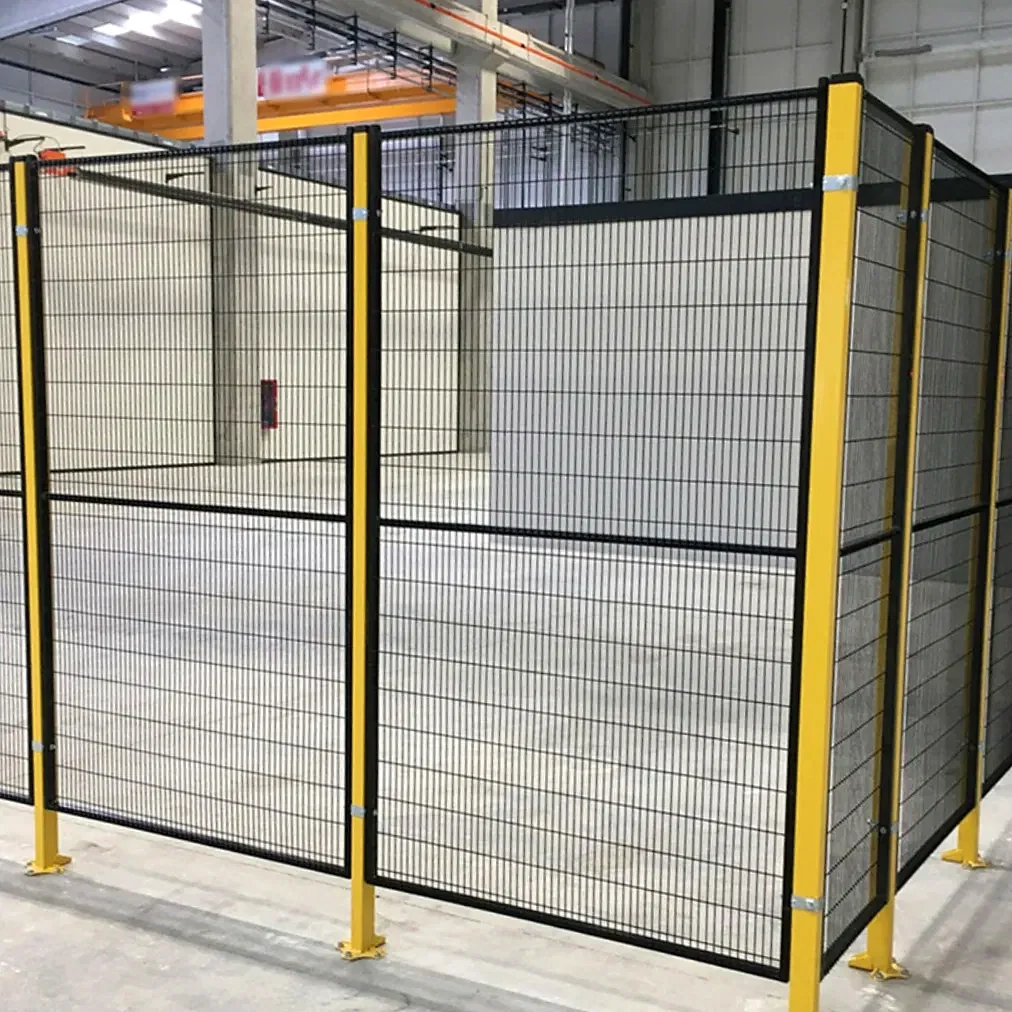 Boundary firstDefine reach, load and access before selecting panels.
Use current sources and application-specific evidence.
This page is general project-planning information, not a substitute for a machine-specific risk assessment, legal advice or verification by the responsible dutyholder. Relevant standards, British adoptions and the legal route should be confirmed for the actual supply or modification.
HSE: introduction to machinery safety · ISO 10218-2:2025: industrial robot applications and robot cells · ISO 13855:2024: positioning and dimensioning safeguards
Questions to resolve before layout approval.
Often. The working envelope, load, end effector, stack stability, trapping points and pallet exchange tasks can require physical guarding, presence sensing or a hybrid arrangement.
A project-specific system may use an interlocked gate, scanner-protected bay or zoned arrangement. Detection, robot state, reset and restart must be coordinated.
Vehicle access can be designed into the concept, but the route, pedestrian separation, opening geometry, robot response and restart conditions must be assessed together.
Yes, subject to review of the installed layout, controls, programme, tooling, loads, access tasks and available space.
Plan the exchange route first
Share the pallet pattern, robot, tool and access method.
We can help define the cell boundary, guarding format, protective devices and integration scope for a new or existing palletising cell.