Controlled access
Interlocks and restart control that support real work.
Doors, hatches, guard locking, reset stations and safety-control interfaces designed around loading, teaching, recovery and maintenance tasks.
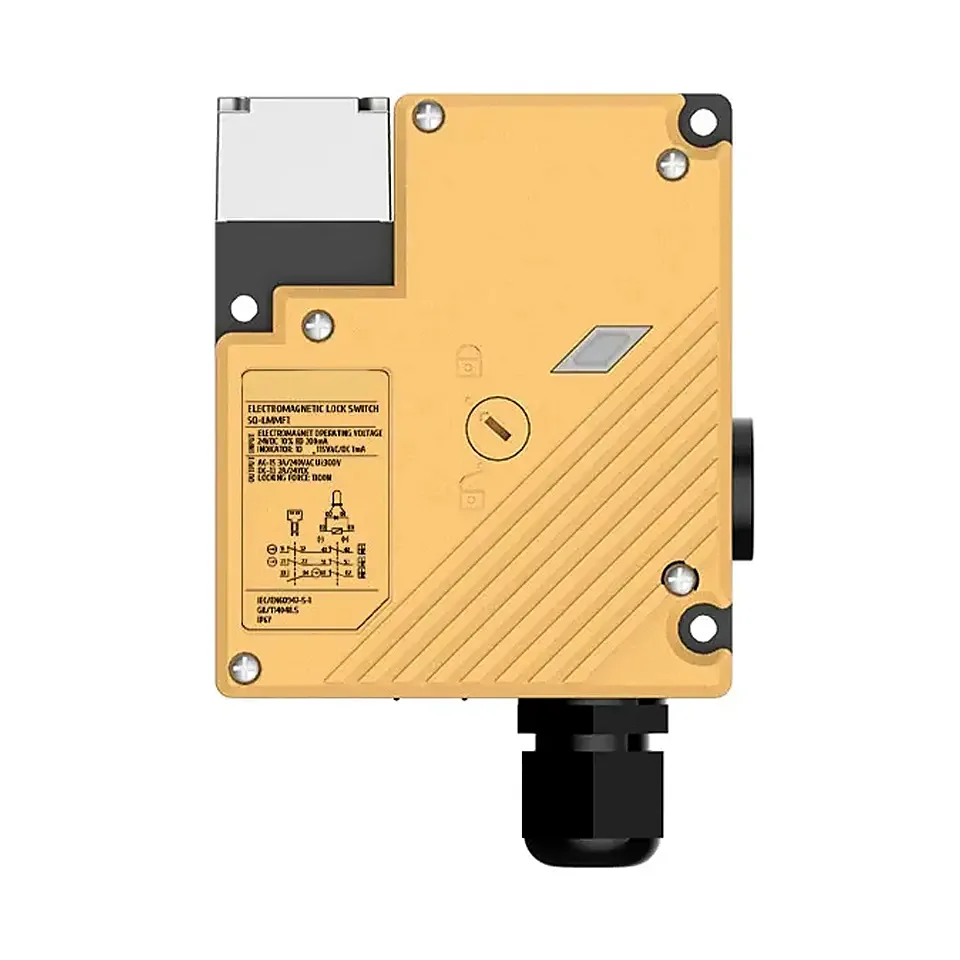
A safe door that operators can actually use.
If normal loading or recovery requires repeated access, a poorly located door or awkward reset sequence will create downtime and encourage unsafe workarounds. Access frequency, visibility, reach and sequence belong in the design brief.
- Normal production loading and unloading
- Robot teaching and programme prove-out
- Tooling, fixture and product changeover
- Fault recovery and jam clearance
- Cleaning, inspection and planned maintenance
- Isolation, escape and emergency considerations
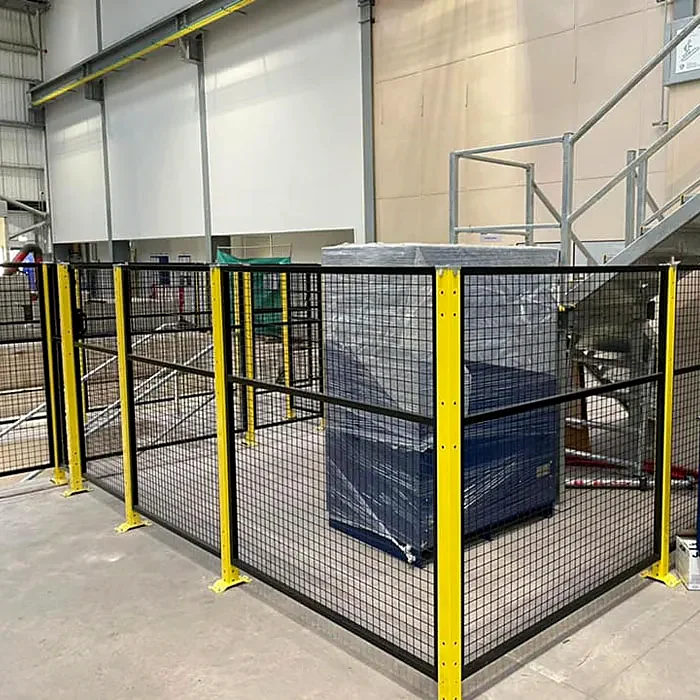 Human factors matterAccess and reset should fit the tasks people perform in every operating mode.
From handle to safe restart.
The physical access point and the safety-control response are engineered as one function.
Opening direction, clear width, sag control, retention, alignment and foreseeable misuse.
Coded, tongue, hinge, non-contact or other technology selected for the task and environment.
Controlled release where access must remain prevented until a hazardous condition has ended.
Defined robot and connected-equipment response when the protective device is actuated.
Deliberate action from a position that supports inspection of the safeguarded space.
Control behaviour intended to prevent protective-device reset alone from initiating movement.
Clear indication and troubleshooting information to support reliable operation and maintenance.
Verification of the agreed access, stop, reset, restart and fault-response behaviour.
Detection is not the end of the safety function.
A clear sequence helps operators understand the cell and provides a basis for validation.
Request access
Production sequence reaches a state where access can be considered.
Reach safe state
Robot and connected hazards achieve the defined protective condition.
Enter & work
Access is controlled while the required task is completed.
Close & reset
Safeguarded space is checked before deliberate acknowledgement.
Enable restart
A separate command returns the machine to the intended operating state.
Safe entry and predictable restart.
Guard locking may be needed where access must remain prevented until a hazardous condition has ended, for example when stopping time is longer than the time needed to reach the hazard. The decision depends on risk, stopping performance, access route and the applicable standards.
It should support a deliberate reset with a clear view of the safeguarded area, while being outside the hazard zone and positioned to discourage reaching it from inside. The person resetting should be able to confirm that nobody is exposed before restart is enabled.
The required stop and safe state must be defined for the machine. An uncontrolled power removal is not automatically the safest or most appropriate response. The robot manufacturer’s safety functions, connected equipment and process hazards must be considered.
Yes, subject to survey and design review. The project may need mechanical changes, switch mounting, coded or guard-locking devices, safety logic, reset controls, functional testing and updated information for use.
Start with the application
Share the robot, tool, task and access requirement.
Send photographs, a layout or a short description. We will help define the survey, guarding concept and safety-integration scope.
Write an access scenario for each cobot operating task
Describe the task before naming the device
Prepare separate scenarios for loading a fixture, teaching, recovering a dropped workpiece, changing the tool and maintaining the cell. For each, identify who enters, where they stand, what remains hazardous and how long access is required. Include the workpiece and process equipment as well as the robot arm. A door opened once per shift and a loading point used every cycle have different practical demands. The competent assessment uses these scenarios to define the necessary protection and control response; choosing an interlock model is a later decision.
Review boundaries with neighbouring equipment
A robot may reach its defined safe condition while a conveyor, gripper, process tool or stored-energy system still presents a hazard. Assign ownership of each interface and describe the required state when access is requested or a safeguard operates. Include what happens if a signal is absent or contradictory. Record the assessed stop and access sequence in a form that the machine integrator and site team can review. Do not assume that removing power from every device is automatically the correct response for every tool or suspended load.
Make validation scenarios visible in the quotation
Ask the responsible designer to identify the tests supporting the agreed safety functions and operating modes. The review should include access during normal running, interrupted sequences, restoration of power and the intended reset and restart behaviour, with conditions controlled by competent personnel. Include visibility of the safeguarded area and the possibility that someone remains inside. Record documentation, instruction and maintenance responsibilities at handover. This helps structure a project brief; device positioning, required performance and the final safety design must follow the actual application assessment.