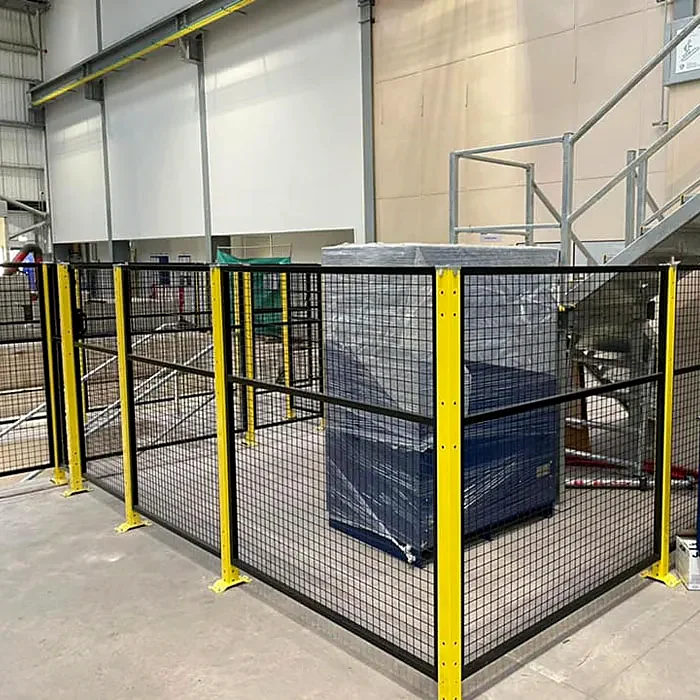
Cobot welding guarding
Contain the welding process hazard.
Protective screening, physical enclosures, interlocked access and safety integration for collaborative robot MIG welding and related hot-work applications.
Direct answer
Does a welding cobot need guarding?
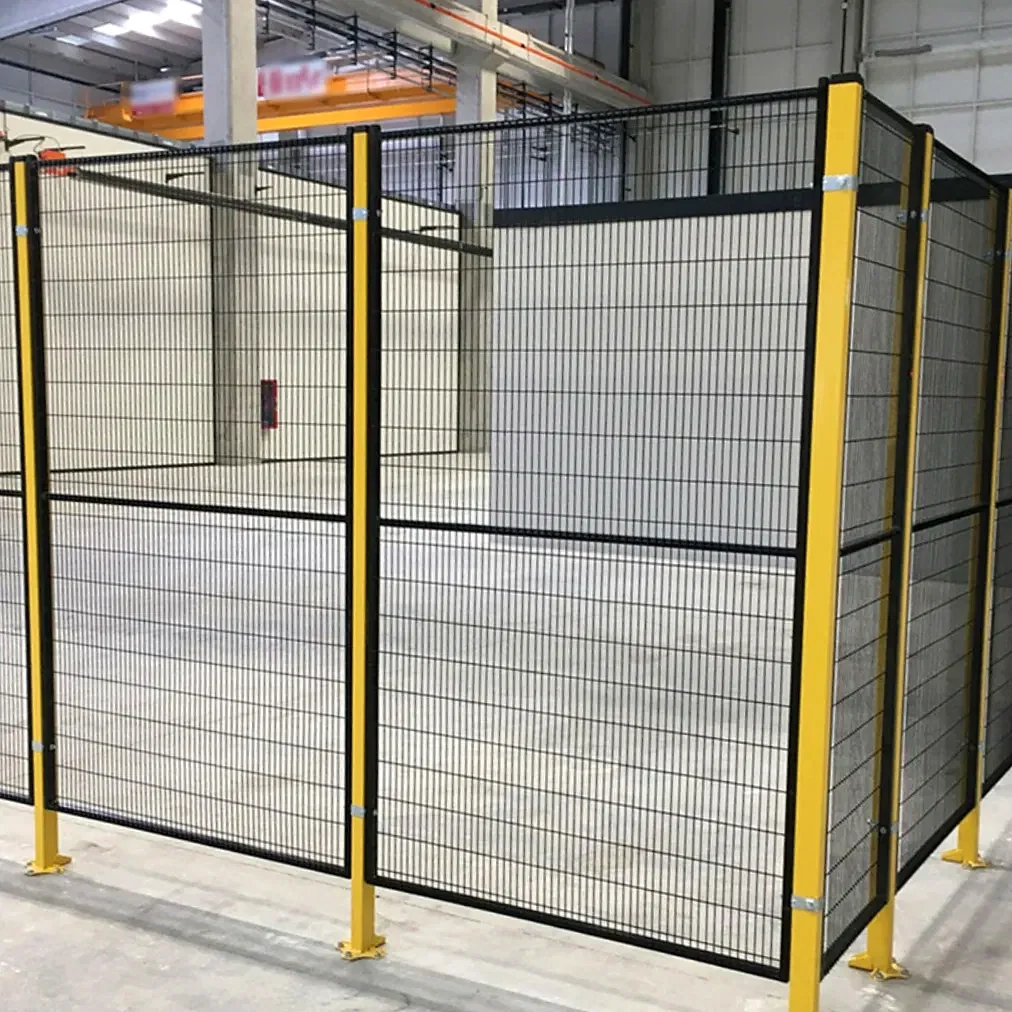
Frequently, because welding adds hazards the robot arm cannot remove. Arc radiation, hot parts, spatter, fumes, sharp wire, fixtures and positioners must be considered alongside robot impact and trapping. A suitable concept may combine opaque or rated screening, solid panels, mesh, interlocked access and extraction interfaces.
Guard the process, not just the arm.
The design should consider routine loading and production plus wire change, tip maintenance, fixture clearing, teaching, cleaning and fault recovery.
Arc radiation
Screen material, coverage, gaps and sightlines need to protect people working or passing nearby.
Heat and spatter
Hot metal, sparks and molten spatter influence panel material, floor treatment and containment.
Fumes
The extraction approach and enclosure airflow should be coordinated with the welding process and site controls.
Wire and torch
Sharp wire, hot torch components and unexpected feed remain hazards during set-up and intervention.
Fixtures
Clamps, positioners and powered tables can create crushing, shearing and trapping points independent of the cobot.
Access sequence
Door release, safe state, stored energy, reset and restart must support loading and recovery without shortcuts.
Visibility, access and containment in one design.
Welding-screen specification and extraction design may require specialist input. Our proposal defines the interfaces and responsibility boundary for the guarding project.
Explore physical guarding systemsA practical route from survey to handover.
We establish what the cell must contain, how people work, and which organisations own the welding, extraction, guarding and control responsibilities.
Brief
Robot, welding set, process, fixtures and site constraints.
Survey
Hazards, access tasks, sightlines, extraction and interfaces.
Design
Panels, screens, access, interlocks and safe behaviour.
Install
Fabrication and coordinated site integration.
Validate
Agreed functional checks and handover evidence.
Clear answers before enclosure design.
Welding introduces hazards beyond robot movement, including arc radiation, hot workpieces, spatter, sharp wire, fumes and powered fixtures. The risk assessment determines whether screens, solid panels, a full enclosure, interlocked access, extraction interfaces or combined measures are needed.
Not by themselves. Robot functions do not control every process hazard created by the welding equipment, wire, workpiece, fixture, fumes or radiation. The complete application needs to be assessed.
Yes. Loading access can be designed using interlocked doors, monitored openings, fixtures or sequenced stations where the chosen measures control both robot and welding-process hazards.
Yes. A survey can review the installed robot, welding process, fixtures, extraction, access and control interfaces before a suitable enclosure and integration scope is developed.
Define the enclosure
Share the welding process and access routine.
Send the robot, welding equipment, fixture and layout details. We will help define the survey and guarding scope.