Collaborative-operation methods
PFL and speed-and-separation monitoring.
Application-led guidance for power and force limiting, contact assessment, protective separation, stopping performance and safety-rated sensing.
Direct answer
What makes cobot operation collaborative?
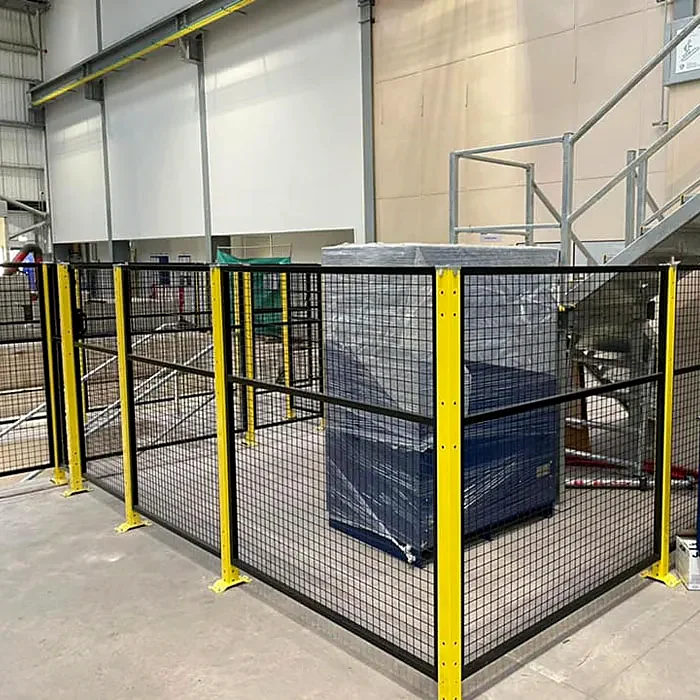
It is the way the complete application is designed and used—not a badge on the robot arm. Power and force limiting (PFL) controls defined contact risk. Speed and separation monitoring (SSM) maintains protective separation as people approach. Either method may need physical guarding around tools, processes or trapping points.
Assess every credible contact scenario.
PFL cannot be confirmed from the robot data sheet alone. Tool, workpiece, speed, geometry and the way a person could be contacted or trapped all change the result.
Effective mass, moving parts, sharp edges, protrusions and material retention influence contact severity.
A credible contact location and the nature of the contact must be identified for the application.
The person can recoil or move away and is not trapped by the application or surroundings.
The person can be clamped or trapped, so force may persist rather than being a brief impact.
Validated speeds, loads, products, tools and modes define the conditions the safety case actually covers.
Where force or pressure testing is required, the scope, equipment, method and competent provider should be agreed before testing.
Monitored approachField geometry must match the actual routes people can take.Protective distance depends on real stopping performance.
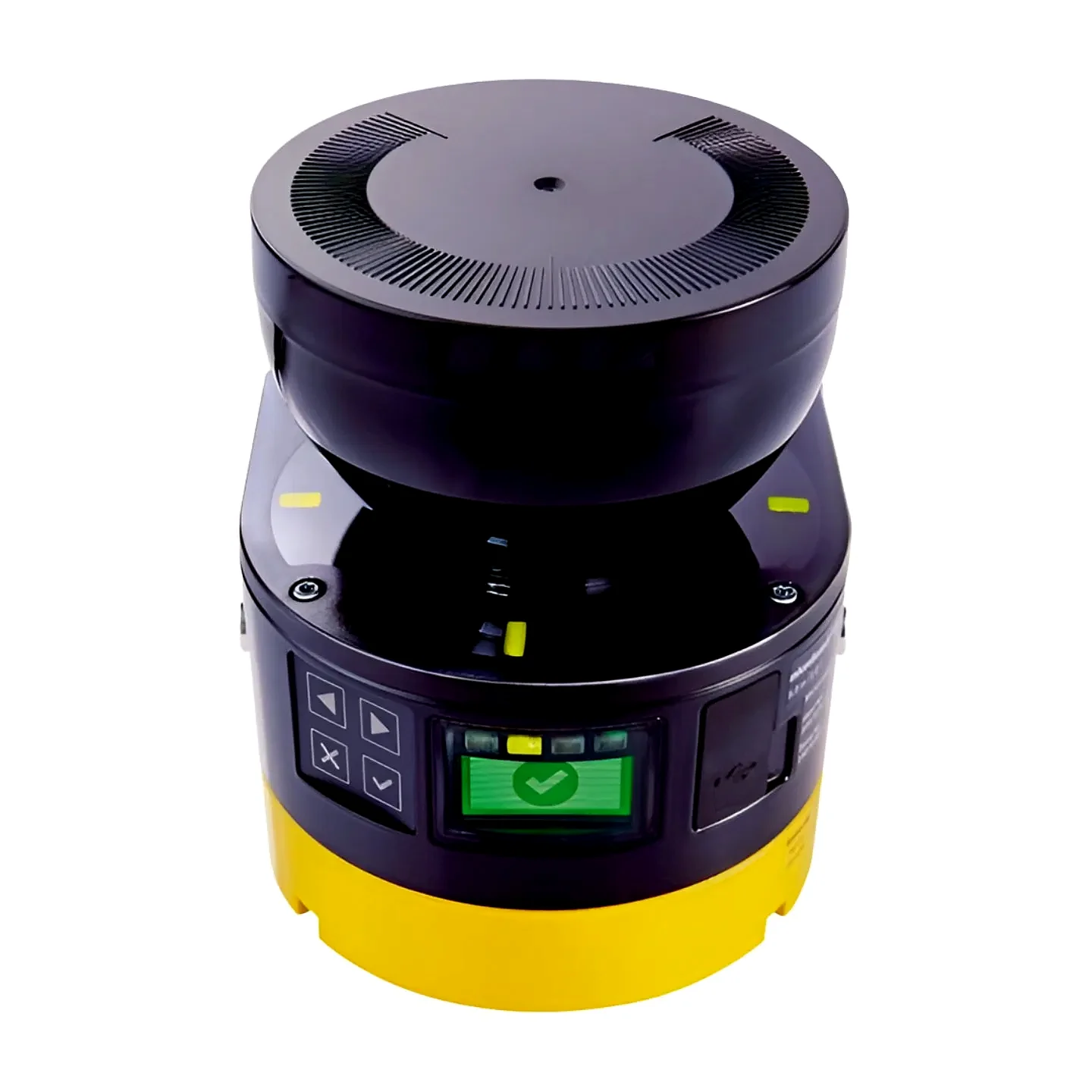
SSM uses safety-rated sensing and control functions to respond as a person approaches hazardous robot movement. A design may use warning, reduced-speed and stop zones, but the safe field boundaries depend on the complete response chain.
- Measured or substantiated robot stopping time and distance
- Sensor, communication and safety-control response
- Human approach speed and possible routes
- Detection capability, intrusion and reach towards hazards
- Robot movement towards the person during response
- Installation tolerances, uncertainty, reset and restart
One application can combine several measures.
The goal is proportionate risk reduction with usable access—not forcing every hazard into one collaborative-operation method.
See scanners and protective devicesTurn a concept into testable requirements.
A useful specification defines the method, assumptions, safety functions, inputs, limits and evidence before hardware is selected.
Analyse
Hazards, tasks, contact and approach scenarios.
Specify
Modes, limits, safe states and performance needs.
Measure
Stopping performance and any agreed specialist tests.
Implement
Guarding, sensing, control logic, reset and restart.
Validate
Test the defined functions and record the results.
Short answers to technical search questions.
Power and force limiting is a collaborative-operation method in which contact risk is controlled through the behaviour and characteristics of the complete robot application. The tool, payload, speed, contact geometry, body region and possible trapping all matter; the cobot arm label alone is not evidence that every contact is acceptable.
Speed and separation monitoring maintains a protective separation between a person and hazardous robot movement. The application responds as separation reduces, using safety-rated sensing and control functions designed around the actual approach and stopping performance.
The safeguard position must use the applicable methodology and project-specific inputs, which can include measured stopping time or distance, sensor and control response, approach speed, intrusion, reach and uncertainty. A generic web calculator cannot validate an installed cell.
Yes. A risk-reduction concept can combine measures, for example monitored approach zones that reduce speed before closer collaboration, plus physical guarding around process hazards. The functions must be designed and validated as one application.
Define the safety method
Start with the tool, task and human interaction.
Share the robot, payload, application, layout, speeds and access tasks. We will help define an appropriate engineering review.